Walkable plazas
Daily life
at walking pace.
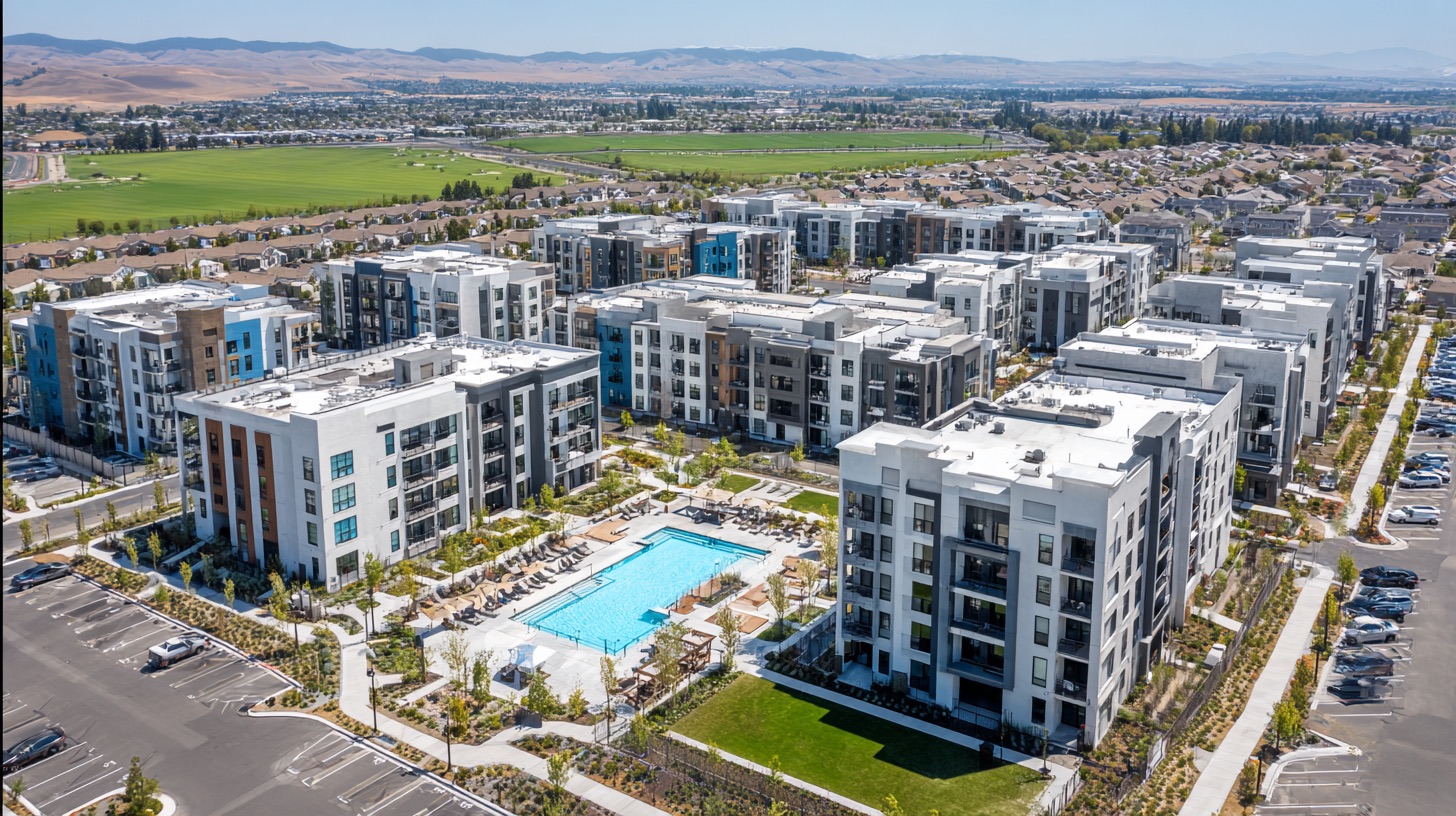
A direction for neighborhoods where homes, errands, shade, and a central plaza sit close enough that walking becomes the easy choice. The planning idea behind it: arrange daily needs within a comfortable walk of home.
Artist visualization. Subject to change.
The idea
Start with the errands, then draw the streets.
The idea asks a simple question of every home in a plan: which daily needs can be reached on foot or by bicycle, and is the route pleasant enough that people choose it? The answer decides where the plaza goes, which streets carry shops, and where parking sits.
Translated to Florida, the idea has to work with existing roads, local zoning, and the weather of the hardest season. Daily needs within a short walk looks at what that means in practice.
The plan
Rings of daily life.
The diagram sets a plaza at the center and draws rings for a short walk and a longer one. Needs of an ordinary day go in the inner ring; weekly needs sit farther out. The rings are a sorting tool: they decide what belongs close, then get tested against real routes, crossings, and shade, because a straight line on a plan is not the walk anyone takes.
Within a short walk
What a plan tries to bring close.
A plan makes room for each of these near home. The site and local demand decide which ones take root.
- Groceries and a pharmacy
- Everyday shopping close enough to carry home in a bag or a basket.
- Coffee and a place to eat
- A café or small restaurant with seating outside, giving the plaza a reason to be busy from morning to evening.
- A park or green
- Lawn, trees, and shade within sight of home: room to stretch, play, or read without planning a trip.
- A place to work away from home
- Shared desks, a library corner, or a café with good tables for the hours when home is too quiet or too busy.
- Health and fitness
- A clinic, a studio or gym, and continuous routes for running and cycling.
- Transit and pickup
- A stop for transit or shared rides, covered bicycle parking, and a pickup point that keeps cars at the edge.
- Small services
- Parcel pickup, a hair salon, a dry cleaner: the small errands that otherwise mean getting in the car.
A day on foot
From first coffee to a late walk.
Morning
The shaded side of the street
The walk to coffee follows the tree line past the green and the first shop fronts, reaching the plaza before it gets busy.
Midday
One loop of errands
Pharmacy, parcel pickup, and lunch at a table on the plaza, then home again without moving the car.
Late afternoon
The green fills up
Once the afternoon storm passes and the air cools, the green fills with games and conversation, and an evening market sets up its stalls on the plaza.
Evening
Light from open doors
Light spilling from restaurants and front windows keeps the plaza lively after dark: dinner outside, a late walk, a bench under the canopy.
The plaza
A plaza people come back to.
Plazas fail quietly. They look full in a rendering and stand empty at noon. Four conditions make the difference, as The case for a useful plaza explores.
- 01
Shade and seating
Trees, canopies, and seats that can be moved. In Florida, shade separates a plaza used all year from one used only in winter, and seating turns a place people cross into one where they stay.
- 02
Active edges
Doors, windows, and small businesses line the edges, with uses that keep staggered hours so the plaza has life at breakfast, at lunch, and after dark.
- 03
Short, calm crossings
Narrow street crossings, slow turning speeds, raised crosswalks, and clear sight lines are meant to reduce conflict with traffic on the way to the plaza. Level, step-free routes are part of the plan from the start.
- 04
Parking that does not dominate
Cars are accommodated behind buildings, beneath them, or at the neighborhood’s edge. The plaza faces people, not parking lots.
Questions
What the idea does and does not mean.
Does walkable mean everything is a short walk away?
No. It is a planning idea that guides where uses go and how streets are designed. Real walking times vary by address, route, and season, and some needs will always be a drive away.
Are shops and services part of the plan?
Space for them is. Whether a café, grocer, or clinic opens depends on the businesses themselves and on how many people live and work nearby. A plan can prepare the right spaces and phase them sensibly; it cannot promise a particular business.
Where do the cars go?
Cars still have a place. Parking is planned where it serves homes without taking over the center, and the amount depends on the market, transit, and local rules. The aim is choice: driving stays possible, and short trips stop requiring it.
Is walking realistic in a Florida summer?
Only when shade is treated as infrastructure: continuous tree canopy, arcades and awnings, places to rest, and water to drink. That is why shade appears in the first plans, as Shade is infrastructure explains.
Related directions
Directions that build on the walk.
Where things stand
A design direction.
No walking time, shop, service, or transit connection is promised for any location. Images are artist visualizations.
Next step
Describe the walk you want.
A planning brief asks what you would want within walking distance, what you would still drive to, and which region you have in mind. Those answers make the first conversation concrete.