Most waterfront plans are drawn from one of two positions: from the water looking in, or from a balcony looking out. Both produce a view. Neither says much about what the water does for someone on an ordinary Tuesday, when there is no guest to impress and the light is flat.
A view is something you look at. A waterfront is something you use. The difference shows up in a handful of decisions that are easy to postpone and hard to fix later: how people arrive, where the shade falls, who can reach the edge, and what there is to do once they get there.
Arrival
The first encounter with a waterfront place should involve the water, not a parking structure. That can be as simple as a road that reveals the water gradually, a drop-off with shade and somewhere to sit, or a lobby that opens toward the edge instead of away from it. The walk from a car to the water should never pass the loading dock.
Arrival also happens on foot and by bicycle, from the streets behind the shoreline. A street that ends at the water with a small open space, rather than a wall of backyard fences, tells everyone inland that the water belongs to the whole place.
A view is something you look at. A waterfront is something you use.
Shade and the edge
An edge in full sun is empty at midday. Shade along the water has to be planned with the view in mind: trees set back far enough to frame the water without hiding it, covered structures where people will actually pause, and seating that faces the water with something solid behind it.
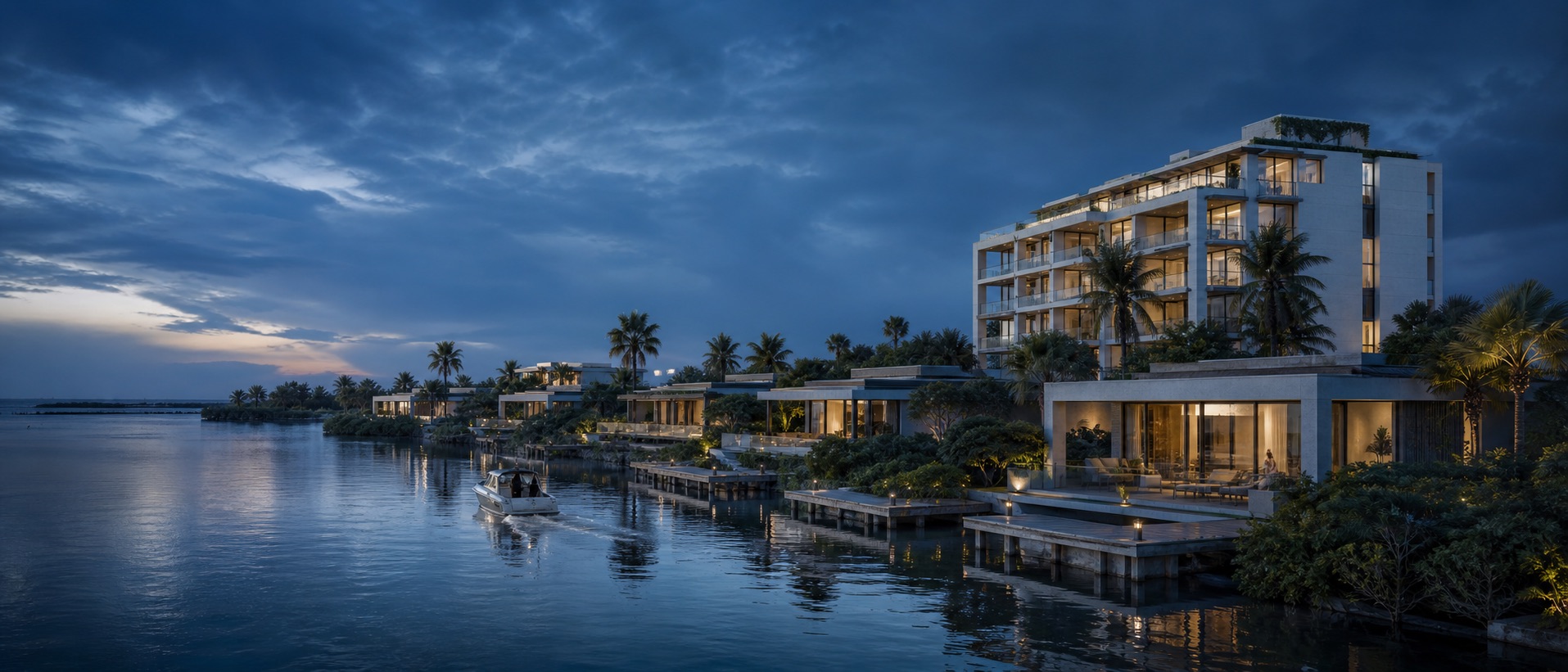
A good edge also has depth. There is room to walk, room to sit, a planted band that softens heat and glare, and then the edge itself. Where conditions allow, a planted shoreline can do some of the work of a hard wall while giving birds and fish somewhere to be. Where a hard edge is needed, it can still include steps down to the water, rails to lean on, and lights low enough not to dazzle anyone at night.
Access beyond the front row
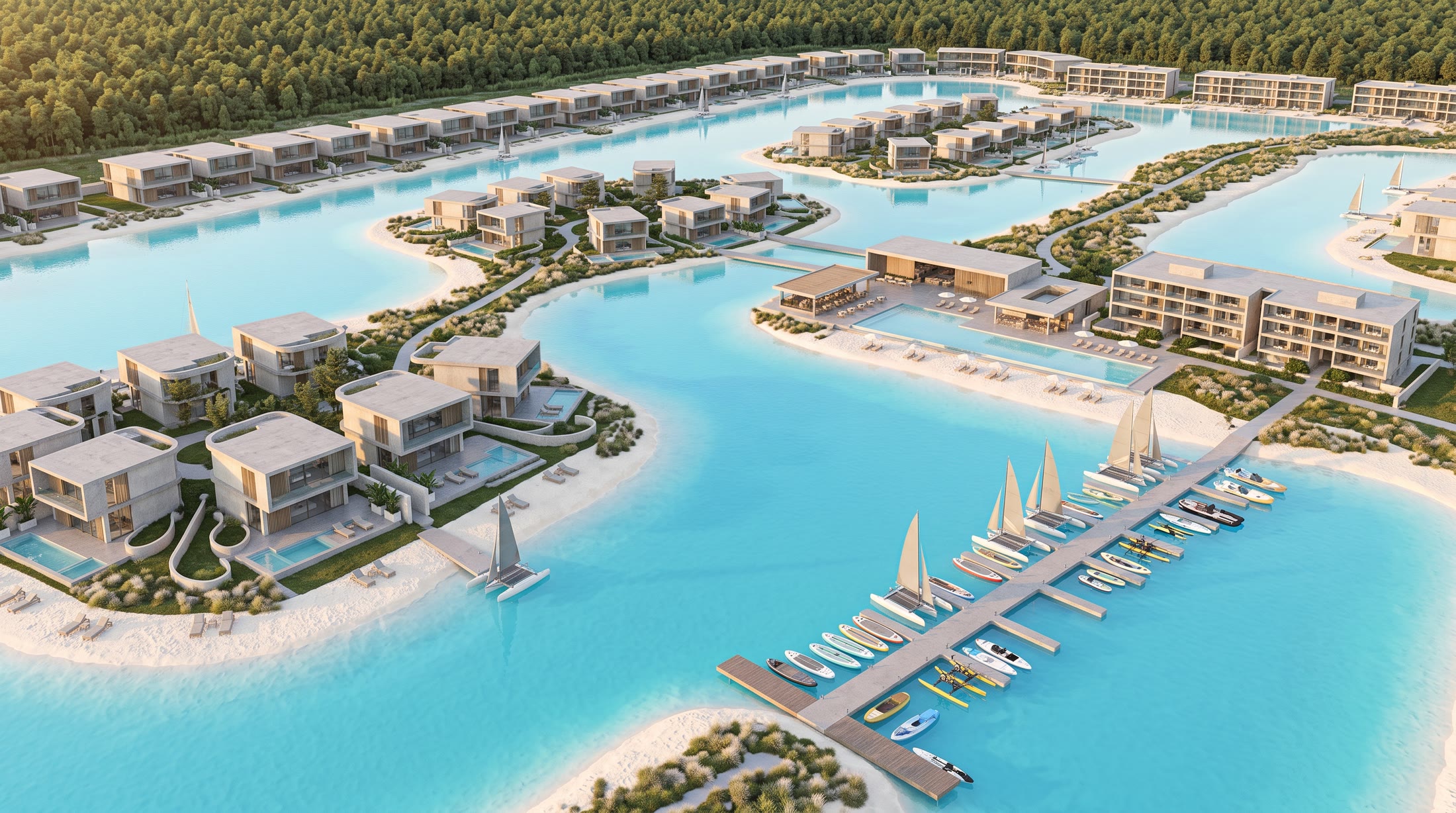
A shoreline divided entirely into private lots gives each home a view and gives the place as a whole very little. The alternative is not to remove private edges but to balance them: a continuous public path where one is possible, frequent points of access, corridors that let inland streets see the water, and shared docks or launch points for paddling and small boats.
These choices shape how the entire community experiences the water, not only the homes closest to it. A home a few streets back still lives with the water if the edge is a short, shaded walk away and there is something to do on arrival.
Access also means reaching the water itself, not only seeing it: a step where feet can dangle, a stretch of sand, a pier long enough to fish from. Contact with water is what people remember, long after the view has become part of the furniture.
Daily use
Use is what keeps a waterfront alive: a morning walk along the edge, a swim where the water is designed for it, a paddle before the wind picks up, coffee at a table near the water, lights coming on along the path at dusk. Each of those needs something concrete, whether a launch ramp, a rinse station, a café with a terrace, or lighting that works for walking.
Water also asks for upkeep, and a waterfront meant for daily use needs an operating plan from the start: who tests and cleans the water, who repairs the dock, and who closes the edge ahead of a storm. In Florida, salt air, heavy rain, and storm season shape nearly every one of those answers.
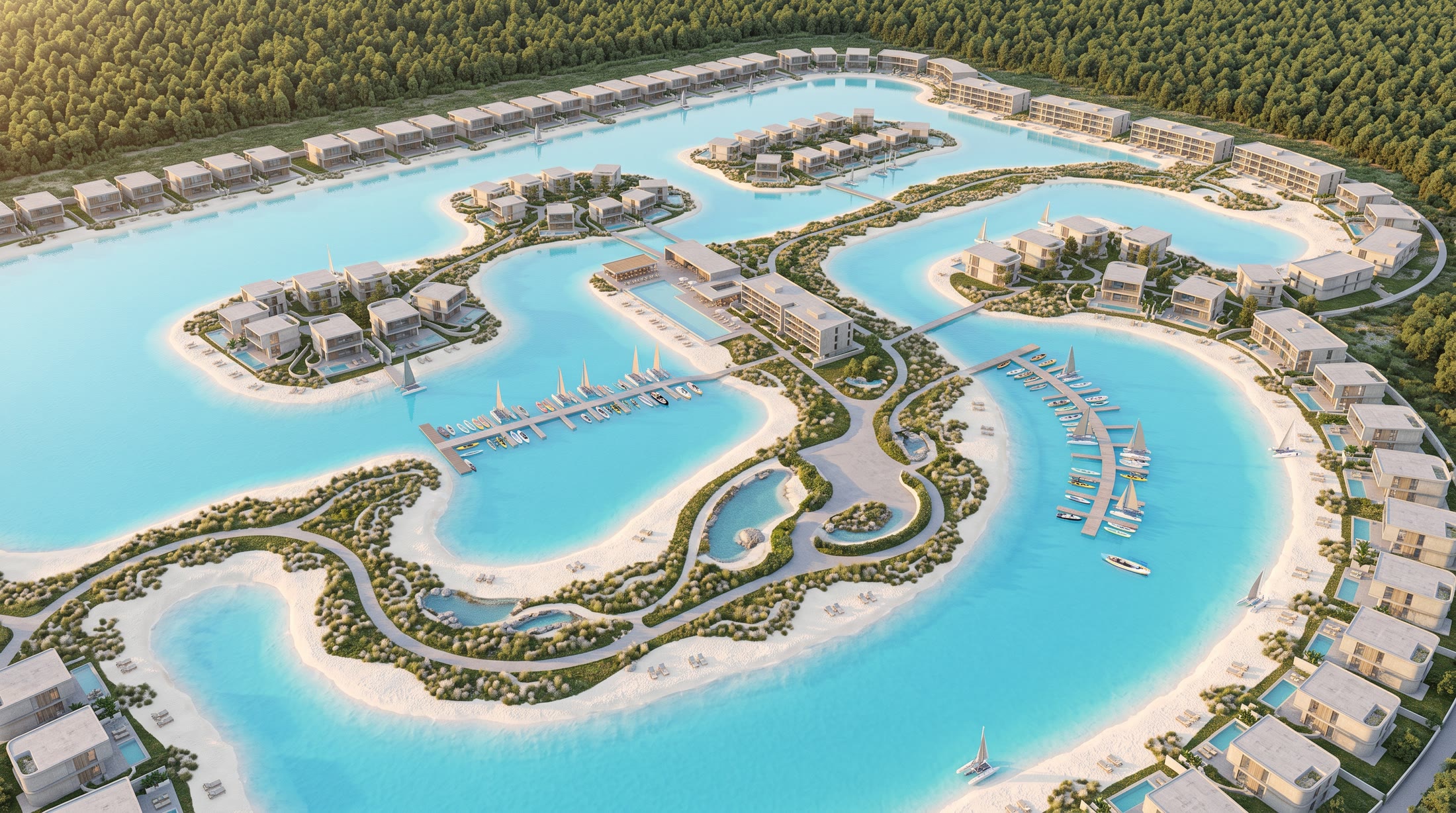
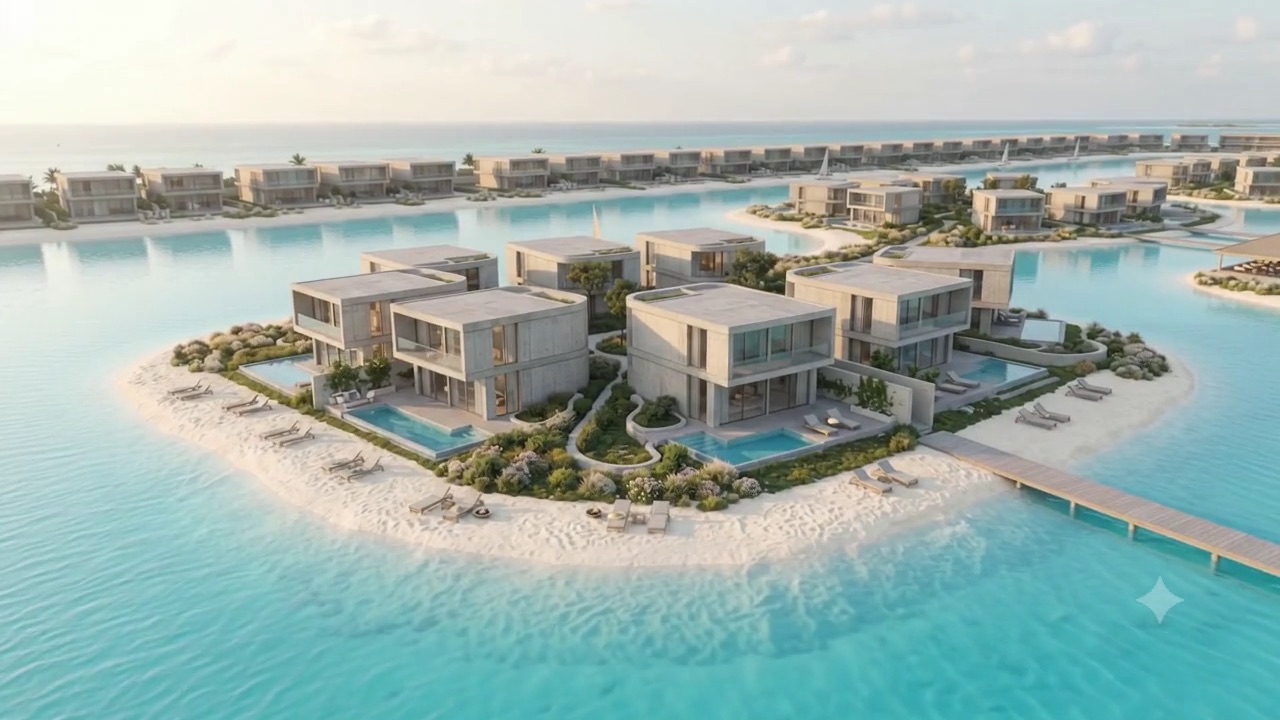
The waterfront and lagoon direction explores these ideas at the scale of a community, and lagoon-front homes consider them from a single residence. Where the water itself belongs on a site is the subject of Lagoons belong on uplands.
Editorial content for general information only. It is not legal, financial, tax, or engineering advice.